

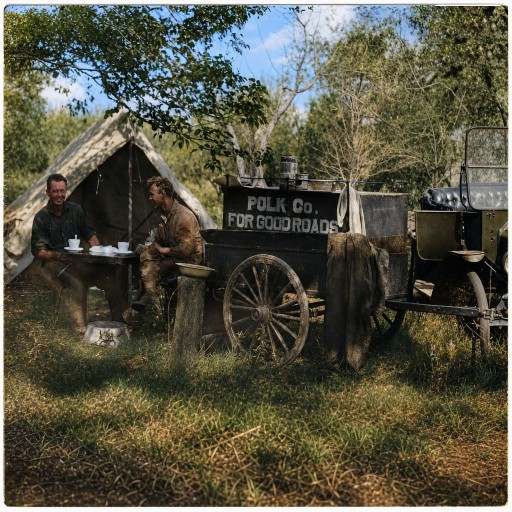
Polk County Road Crew Circa 1915
Polk County is available for adoption.
Please consider joining the NEGenWeb as a County Coordinator.
Contact the State Coordinator
for more information.
We
have many genealogical resources available here.
We
would appreciate any contributions you would like to
make to this site.
Types of materials we are looking to
include on this website are:
family histories, biographies, photos,
obituaries, tombstone photos
& inscriptions, cemetery lists, etc.
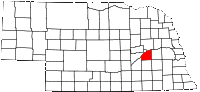
Polk County, Nebraska
Polk County was originally part of a larger Butler County until January 26, 1856, when the Nebraska Territorial Legislature established county boundaries along the Platte River. The present‑day Polk County emerged in 1870, after a special election created the new county and named it for President James Knox Polk.
Early county government had no central office—each elected official conducted business from his home. This changed in October 1871, when residents voted to make Osceola the county seat. A frame courthouse was soon built, though it was destroyed by fire in 1881, taking many early records with it. The county replaced the structure with a brick courthouse in 1882, and later with a modern Renaissance‑style courthouse dedicated in 1922, reflecting the county’s growing prosperity.
Settlement in Polk County grew steadily during the 1870s and 1880s, with homesteaders establishing farms, schools, churches, and small towns across the prairie. Osceola developed as the administrative and commercial center, while communities such as Stromsburg, Shelby, and Polk became important local hubs. Agriculture—especially corn, soybeans, and livestock—shaped the county’s economy and continues to define its rural identity.
One of the most defining features of Polk County’s history is
the strong presence of Swedish immigrants,
especially from the late 1860s through the 1880s. Drawn by
available homestead land, familiar agricultural conditions,
and letters from earlier settlers, Swedish families
established a vibrant cultural foothold—most notably in Stromsburg,
which became known as the “Swede Capital of Nebraska.”
Swedish-language Lutheran churches, community societies, and
close-knit migration networks encouraged additional
settlement, creating one of the largest Swedish communities in
the state.
For genealogists, Polk County offers rich resources: courthouse records (with some gaps due to the 1881 fire), long‑running newspapers, cemetery listings, church histories, and town archives that document more than 150 years of settlement and family life across central Nebraska.
Acknowledgement & Attribution
Portions of the Polk County NEGenWeb data presented here were originally compiled and coordinated by Beth Sparrow, former Polk County GenWeb Coordinator. These materials were recovered from the archived RootsWeb site and preserved for continued public access.
We gratefully acknowledge Beth’s work and credit her as the original contributor for this historical and genealogical content.